
Textile yarn sizing have undergone significant changes in the past thirty years due to new fibers, spinning methods, and weaving techniques, all aimed at enhancing product quality and productivity. Sizing remains crucial in the textile value chain, especially as modern looms operate at high speeds, necessitating efficient warp preparation.
Innovations in sizing machines and chemicals are evolving to meet these demands. However, sizing is complex, influenced by fiber and yarn types, sizing agents, and their interactions during weaving. Challenges include predicting sizing efficiency, size penetration, and easy removal after weaving, which continue to puzzle textile scientists and technologists

Weaving Performance
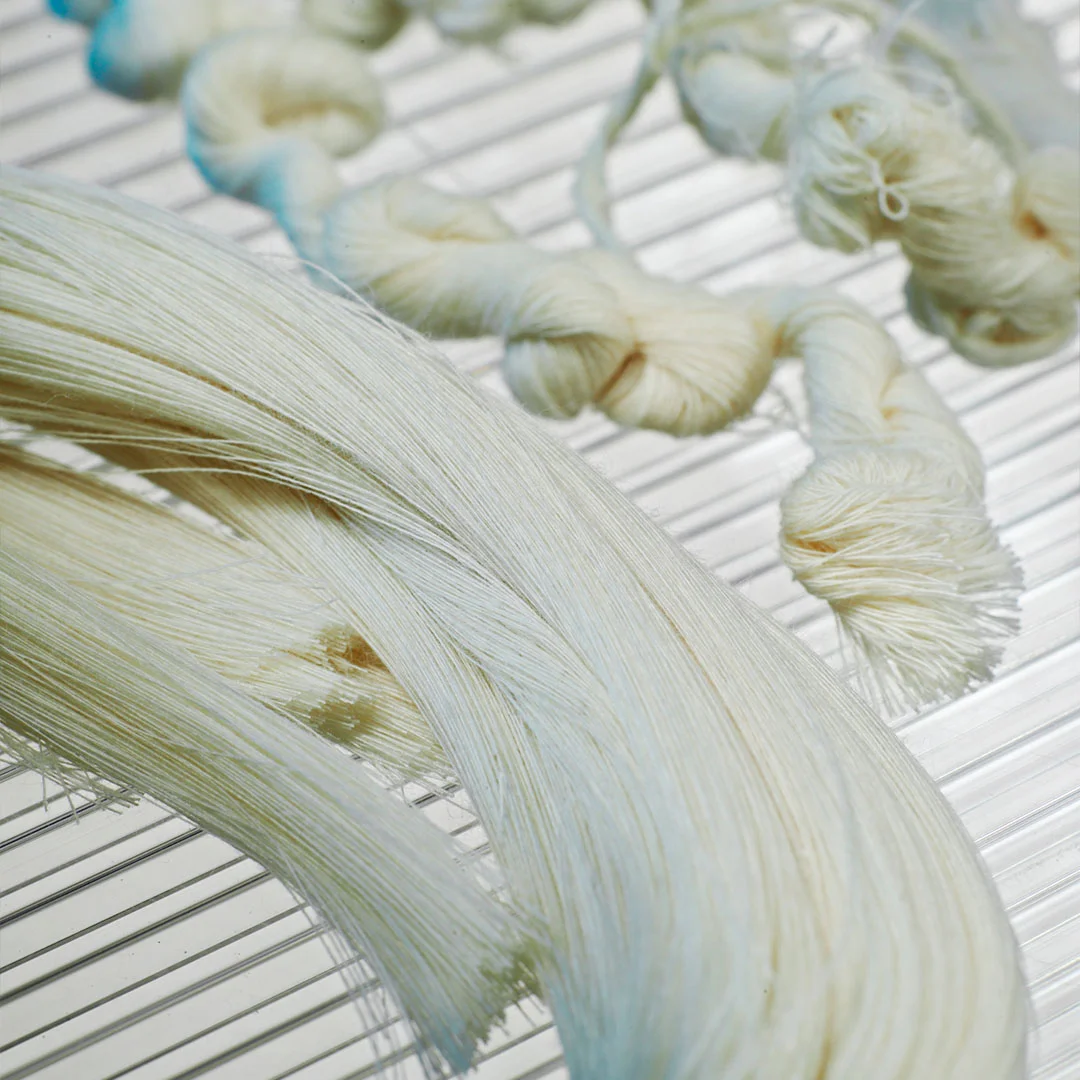
During the production of textile products, the yarns are woven with high speed. Therefore, yarn sizing is an important step in the preparation of textile products to protect the yarns against breakage. The sizing agent should allow good weaving performance and it should be easy to remove. Next to that, costs is an important factor.
Emsland Group offers cost-in-use effective Emsize® modified pea and potato starches for different types of yarns. These sustainable products facilitate good weaving performance and are easy to remove.

Natural starch and its derivatives still make up nearly 80% of sizing agents used globally in the textile industry, primarily due to their affordability. However, the rise of new spinning and weaving technologies has created a demand for alternative sizing agents. This includes materials like PVA, carboxymethylcellulose, acrylic polymers, and resins, which are often used in combination with starches and starch derivatives.
Emsland Nişasta emphasizes high-quality potato starch and derivatives to maintain competitiveness in this evolving landscape. Their blended products(compounds- starch derivatives & synthetic materials) serve multiple purposes, including sizing for mixed-synthetic and natural threads for home textiles, gray Fabric, shirtings, denim, gabardine, etc.
This versatility highlights the importance of quality in modern textile applications. The systematic use of our starch, starch derivatives, and blended products( ENSIZE SERIES ) throughout textile production significantly enhances fabric properties. Additionally, our latest starch derivatives and blended products help meet demands for reduced environmental pollution by requiring smaller amounts for effective results.
Emsland Group and Emsland Nisasta prioritize achieving ZDHC Level 3 and GOTS 7.0 certifications to uphold our commitment to sustainability and quality in the textile industry.
The ZDHC Level 3 certification ensures that suppliers meet stringent chemical management standards, promoting safer and more sustainable practices in the textile industry. This reduces the risk of harmful substances in products. Similarly, the GOTS 7.0 certification guarantees that textiles are organic and produced ethically, covering the entire supply chain from raw materials to finished products. For customers, these certifications provide assurance of quality, environmental responsibility, and compliance with international standards, fostering trust and sustainability in their sourcing decisions.

Grip & Firmness
Textile finishing agents are used to give the textile product, such as tablecloths, firmness or grip after washing. This firmness leads to less damage of the textile product but also allows for easier further processing such as ironing or pressing.
Emsland Group offers Empre® KST and Emcol® HE potato starches for textile finishing that dissolve fast and are easy to use. Different options are possible depending on the desired grip.
Rheology & Bleeding
For textile printing the thickener system is a crucial component of a print paste. The thickener gives the print paste the required rheology to be able to apply the color uniformly and evenly. Next to that it should hold the color in place so that it can be used next to another color without bleeding.
Emsland Group offers Emprint® CE corn-based starch ethers for textile print pastes. They have the desired quality in terms of rheology, increases the brilliance of the colours and increaases the sharpening of the colours.

This page only shows standard solutions for the applications. For more information about other products in our portfolio or about concepts and recipes, please contact us.
Lorem Ipsum is simply dummy text of the printing and typesetting industry. Lorem Ipsum has been the industry’s standard dummy text ever since the 1500s, when an unknown printer took a galley of type and scrambled it to make a type specimen book.